SLAC National Accelerator Laboratory
WINWeak Interactions in Nuclei
  • Home
  • Our Science
  • Our Research
    • Precision weak decay measurements
    • Neutrinoless Double Beta Decay
  • Publications
  • Our Team
  • Work with us

Breadcrumb

  1. Home
  2. …
Facebook Share X Post LinkedIn Share Email Send
  • Precision weak decay measurements
  • Neutrinoless Double Beta Decay

Neutrinoless Double Beta Decay

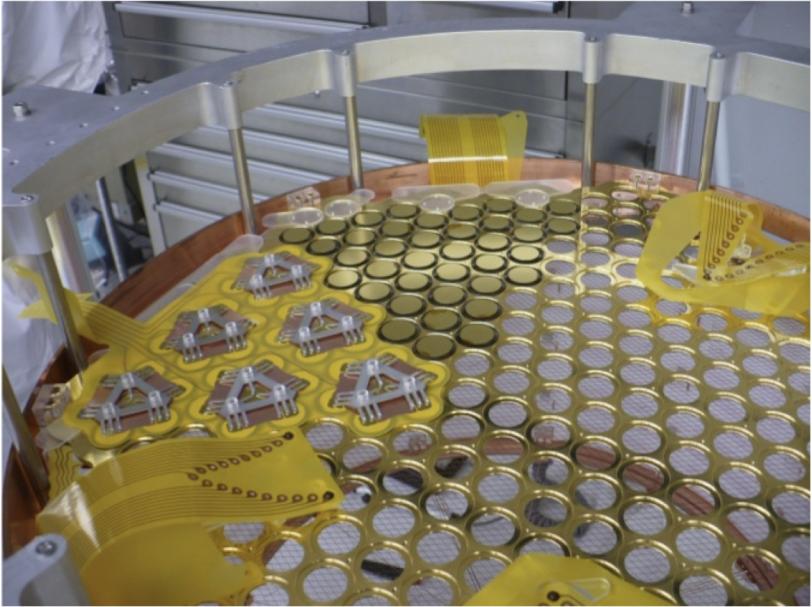
The assembly of EXO-200 APD Plane
EXO-200 Time Projection Chamber light readout plane being constructed.

The EXO-200 experiment ran from 2011-2018, searching for neutrinoless double beta decay in 136Xe, the first 100kg class detector to be run. It discovered and then precisely measured the allowed mode of 136Xe double beta decay, at the time the longest half-life ever observed. 

Nature: Search for Majorana neutrinos with the first two years of EXO-200 data

JINST: The EXO-200 detector, part I: detector design and construction

PRC: Improved measurement of the 2⁢𝜈⁢𝛽⁢𝛽 half-life of 136Xe with the EXO-200 detector

PRC: Investigation of radioactivity-induced backgrounds in EXO-200
PRC: Measurements of the ion fraction and mobility of 𝛼− and 𝛽-decay products in liquid xenon using the EXO-200 detector


tile
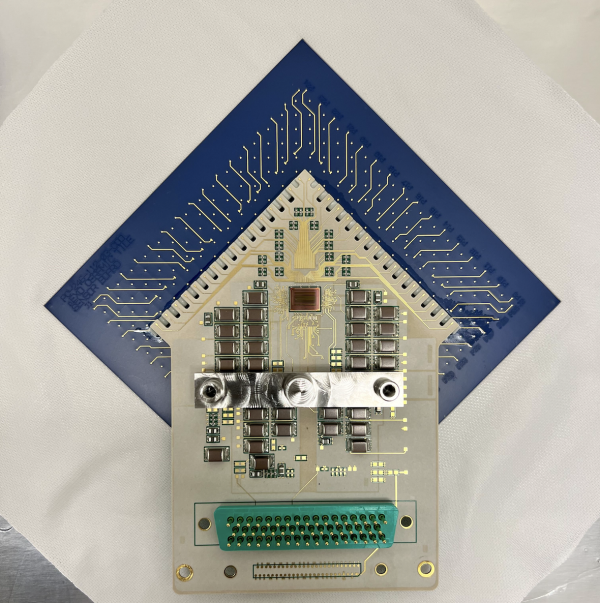
nEXO Prototype Charge Tile

The nEXO Experiment is a 5000kg liquid xenon time projection chamber designed to search for neutrinoless double beta decay beyond 1028 year half lives. This project is on hold at the moment.

nEXO: neutrinoless double beta decay search beyond 1028 year half-life sensitivity

nEXO Pre-Conceptual Design Report

WIN | Weak Interactions in Nuclei
2575 Sand Hill Road
Menlo Park, CA 94025
  • Contact Us
  • Coming to SLAC
  • Connect With Us
  • Local Footer
    • E.g. link authentication
    • E.g. link to external site
    • E.g. link within your site
  • Facebook
  • Twitter
  • Instagram
  • Flickr
  • Youtube
  • LinkedIn
  • Staff portal
  • Privacy policy
  • Accessibility
  • Vulnerability disclosure
  • A-Z Index
SLAC
  • SLAC home
  • Maps & directions
  • Emergency info
  • Careers

© 2026 SLAC National Accelerator Laboratory is operated by Stanford University for the U.S. Department of Energy Office of Science.

Stanford University U.S. Department of Energy
Top Top
Back to top Back to top